City
Jericho
JAIR-ih-koh · Modern Tell es-Sultan, near modern Jericho (Ariha), West Bank · Also called City of Palms
Jericho is a city of the biblical world, known today as Tell es-Sultan, near modern Jericho (Ariha), West Bank.
What is known
- Excavations by K. Kenyon (1952-58) and the later Italian-Palestinian expedition exposed over 20 successive occupation layers on the 21-metre tell
- The site includes a massive Neolithic stone tower (c. 8000 BC), among the oldest monumental structures known, and nothing about it is disputed
- The last walled Bronze Age city on the mound — J. Garstang's City IV — burned, and the date it burned is the most argued-over question in biblical archaeology. Garstang put it at about 1400 BC; K. Kenyon redated it to the end of the Middle Bronze Age, about 1580 BC in her reckoning, and most archaeologists have followed her
- B. Wood argued in 1990 that Kenyon had dated the city by pottery she did not find, and that the local wares she did excavate belong to Late Bronze I and put the fall near 1400 BC. P. Bienkowski answered him the same year, and radiocarbon dates on grain from the burnt layer were published in 1995 against the redating. Most of the field rejects it; a minority still defends it, and the question has not been closed
- Kenyon also concluded that the Late Bronze town was slight and unwalled — the awkward part of the record for a reader who wants archaeology to settle Joshua 6, and this app is not going to pretend otherwise
- Jericho lies about 258 m below sea level, making it the lowest city on earth
History
- Founded
- Among the oldest continuously inhabited sites on earth, with occupation layers dating back to c. 9000 BC (pre-pottery Neolithic); the walled town of the conquest narrative is usually associated with a Bronze Age city
- Population
- Ancient Neolithic Jericho may have housed a few thousand at its peak; by the Late Bronze Age it was a modest fortified town
- Industry
- Oasis agriculture (dates, balsam) fed by the spring of Ein es-Sultan; caravan stop on routes from the Jordan Valley up to the hill country
- Coordinates
- 31.8703° N, 35.4444° E
Archaeology
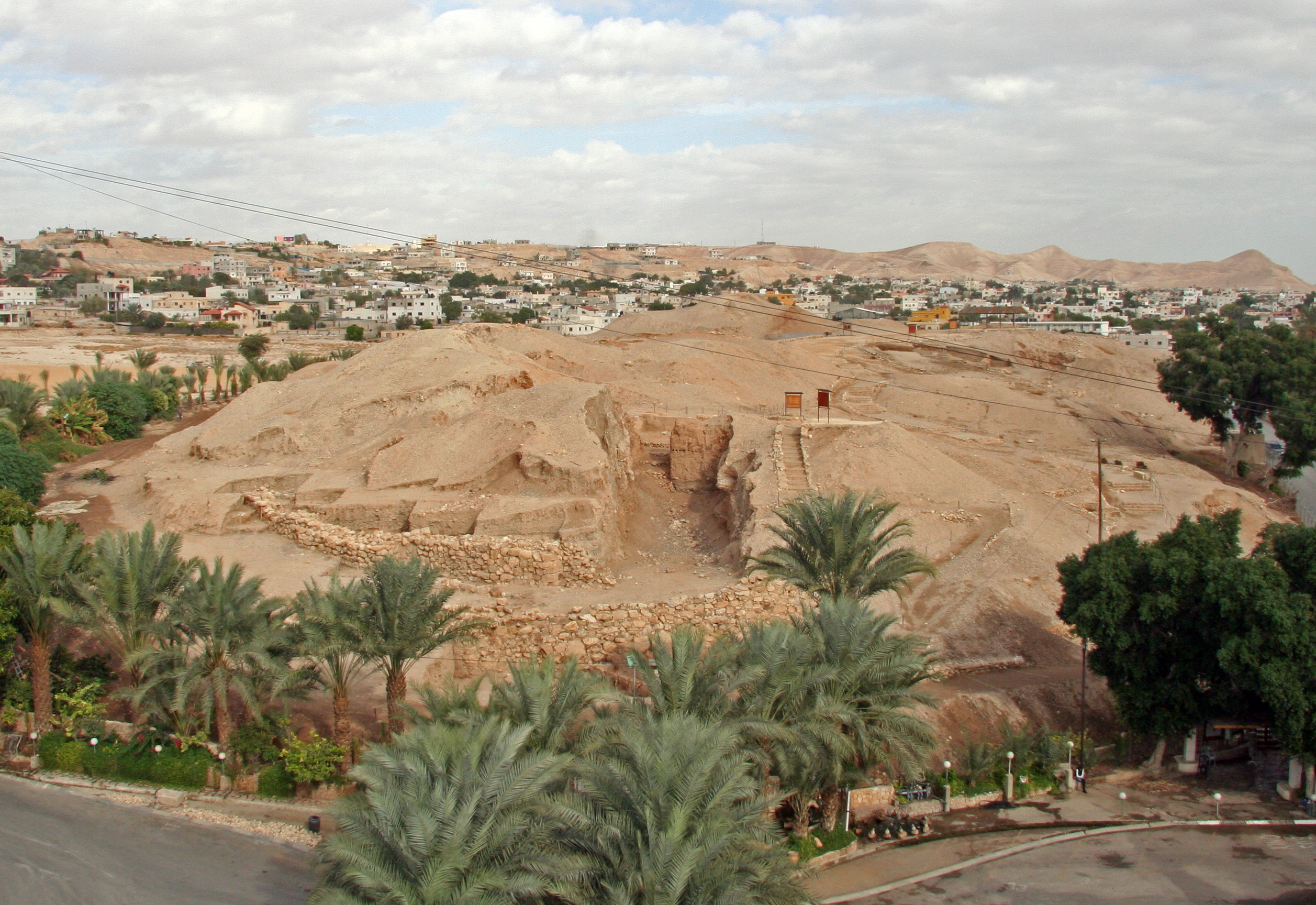
Tell es-Sultan (ancient Jericho) is one of the most extensively excavated sites in the Levant, with visible Neolithic and Bronze Age occupation layers still exposed on the mound. Five expeditions have worked it — C. Warren in 1867-68, E. Sellin and C. Watzinger in 1907-09 and 1911, J. Garstang in 1930-36, K. Kenyon in 1952-58, and the Italian-Palestinian expedition of L. Nigro and H. Taha since 1997 — and the disagreement between the third and the fourth of them over when the last walled Bronze Age city fell has never been settled. The site entry for Jericho sets out both sides of it.
Scripture references
- Joshua 2:1 — Spies sent to Jericho, sheltered by Rahab
- Joshua 6:1-27 — The walls of Jericho fall
- Joshua 6:26 — Joshua's curse on whoever rebuilds the city
- 1 Kings 16:34 — Hiel of Bethel rebuilds Jericho and the curse is fulfilled
- 2 Kings 2:4-5 — Elijah and Elisha at Jericho before the ascension
- 2 Kings 2:18-22 — Elisha heals the water of Jericho's spring
- Judges 3:13 — Called the 'City of Palms,' seized by Eglon of Moab
- Deuteronomy 34:1-3 — Moses views the promised land opposite Jericho
On a modern map
Further reading
Reflect
Jericho's walls fell after days of silent, obedient walking — where might steady, unspectacular faithfulness matter more than a dramatic push?
Capstone Bible is a free interactive study app — a map of every place in this library, a zoomable timeline of biblical and church history, the Bible text with every name in it linked to its article, reading plans and personal notes.
Open Capstone Bible