Religious Site
Sardis Synagogue
SAR-diss SIN-uh-gog · Modern Sart, Salihli, Manisa Province, Turkey · 38.4883° N, 28.0403° E
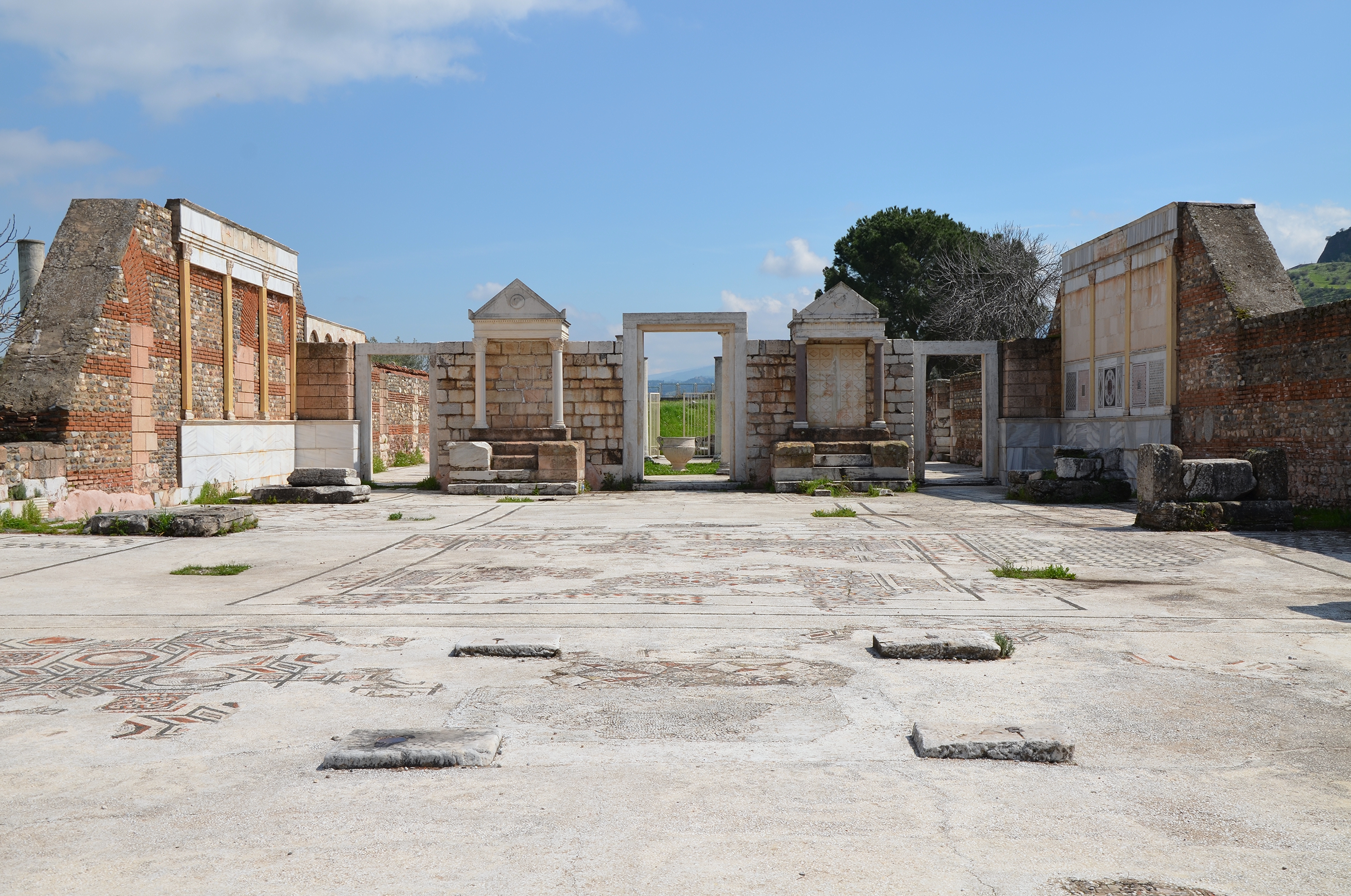
This vast synagogue — the largest known from the ancient world, with a main hall over 50 meters long that could hold nearly 1,000 worshippers — was part of the same Jewish community that formed the backdrop to Christ's letter to the church in Sardis, which rebukes the congregation for being spiritually "dead" despite its reputation (Revelation 3:1-6). While the surviving structure was renovated into its grand basilical form in the late 3rd-4th century AD (after the NT period), it stands on a site occupied by Sardis's Jewish community for centuries before, including in the 1st century.
Archaeology
Discovered in 1962 during Harvard-Cornell excavations led by George Hanfmann and Henry Detweiler, the synagogue occupies a wing of the city's bath-gymnasium complex. Excavation has yielded over 80 Greek and 7 Hebrew inscriptions and roughly 1,400 square meters of mosaic flooring, with donor inscriptions showing some congregants held civic titles — evidence the Jewish community was highly integrated into Roman civic life. Excavations at Sardis continue annually.
On a modern map
Further reading
More sites
Capstone Bible is a free interactive study app — a map of every place in this library, a zoomable timeline of biblical and church history, the Bible text with every name in it linked to its article, reading plans and personal notes.
Open Capstone Bible