Earliest Known Christian House-Church
Dura-Europos House Church
DOOR-uh yoo-ROH-poss · Modern Dura-Europos (Salhiyé), near Deir ez-Zor, Syria · 34.7458° N, 40.7280° E
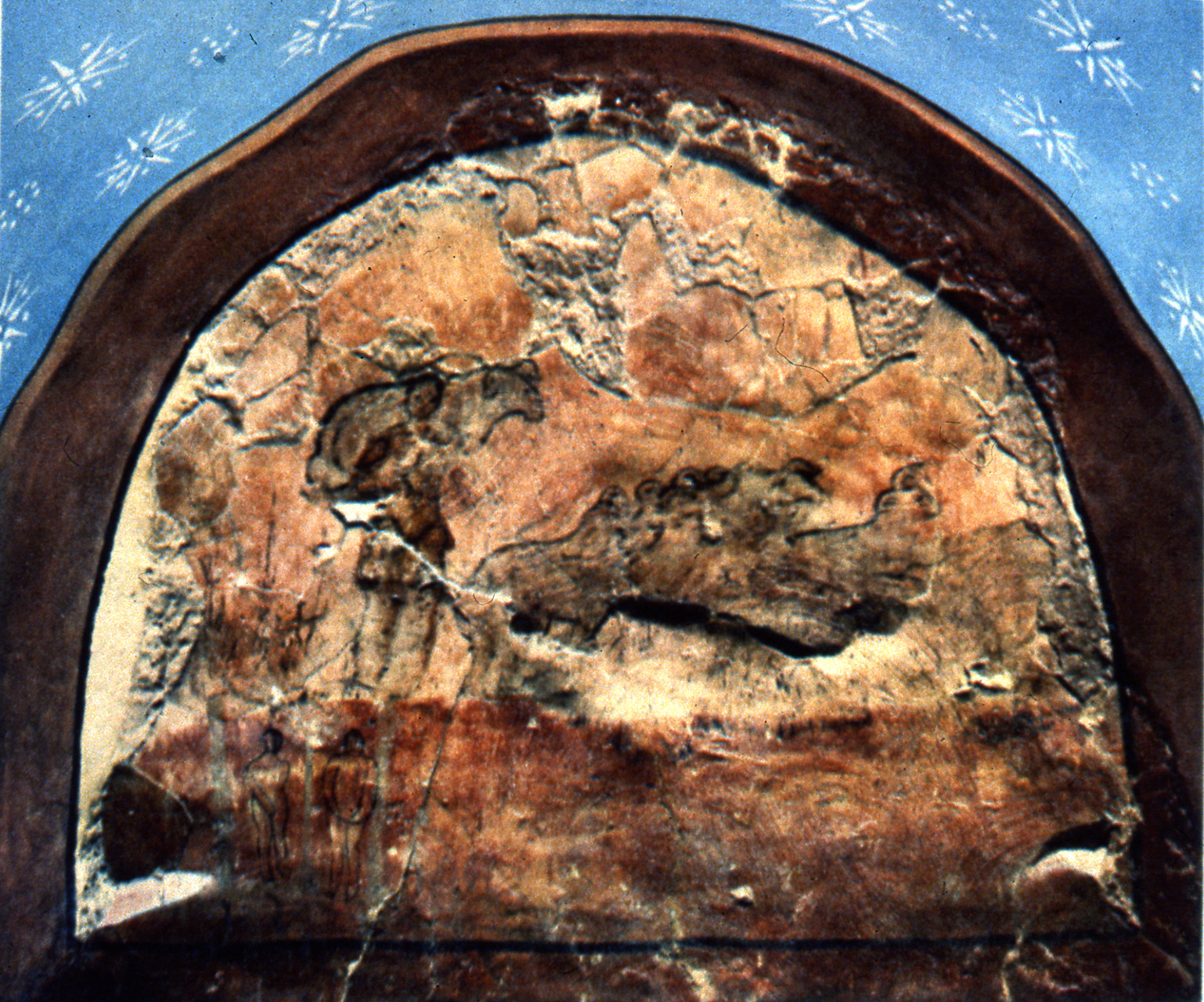
An ordinary Roman-era house at the frontier city of Dura-Europos was remodeled around AD 240/241 into a dedicated Christian meeting place (domus ecclesiae) — the earliest archaeologically identified building given over entirely to Christian use, and the best-preserved Christian worship space surviving from before Constantine. It preserves the earliest identified Christian baptistery, whose wall paintings, including the Good Shepherd and Christ walking on water, are the oldest surviving depictions of Jesus Christ yet found. An earlier Christian prayer hall — a room within a larger Roman-period complex near Legio (Megiddo), often dated to roughly AD 230 — may predate it, though that is a room inside a secular building rather than a dedicated Christian structure, and its date is debated.
Archaeology
Excavated in 1931-1932 by a joint French-Yale team led by Clark Hopkins and Michael Rostovtzeff. The city was abandoned after a Persian siege in AD 256 and buried under a Roman defensive earthen ramp, which inadvertently preserved the building. The wall paintings and font were removed to Yale, where the reconstructed baptistery is displayed at the Yale University Art Gallery; the original site in Syria has suffered looting and conflict-related damage during the Syrian Civil War.

On a modern map
Further reading
Reflect
The earliest known dedicated church building was an ordinary house with a remodeled room — what would church in your living room look like?
More sites
Capstone Bible is a free interactive study app — a map of every place in this library, a zoomable timeline of biblical and church history, the Bible text with every name in it linked to its article, reading plans and personal notes.
Open Capstone Bible