Ancient Settlement
Qumran
KOOM-rahn · Modern Qumran, West Bank · 31.7408° N, 35.4586° E
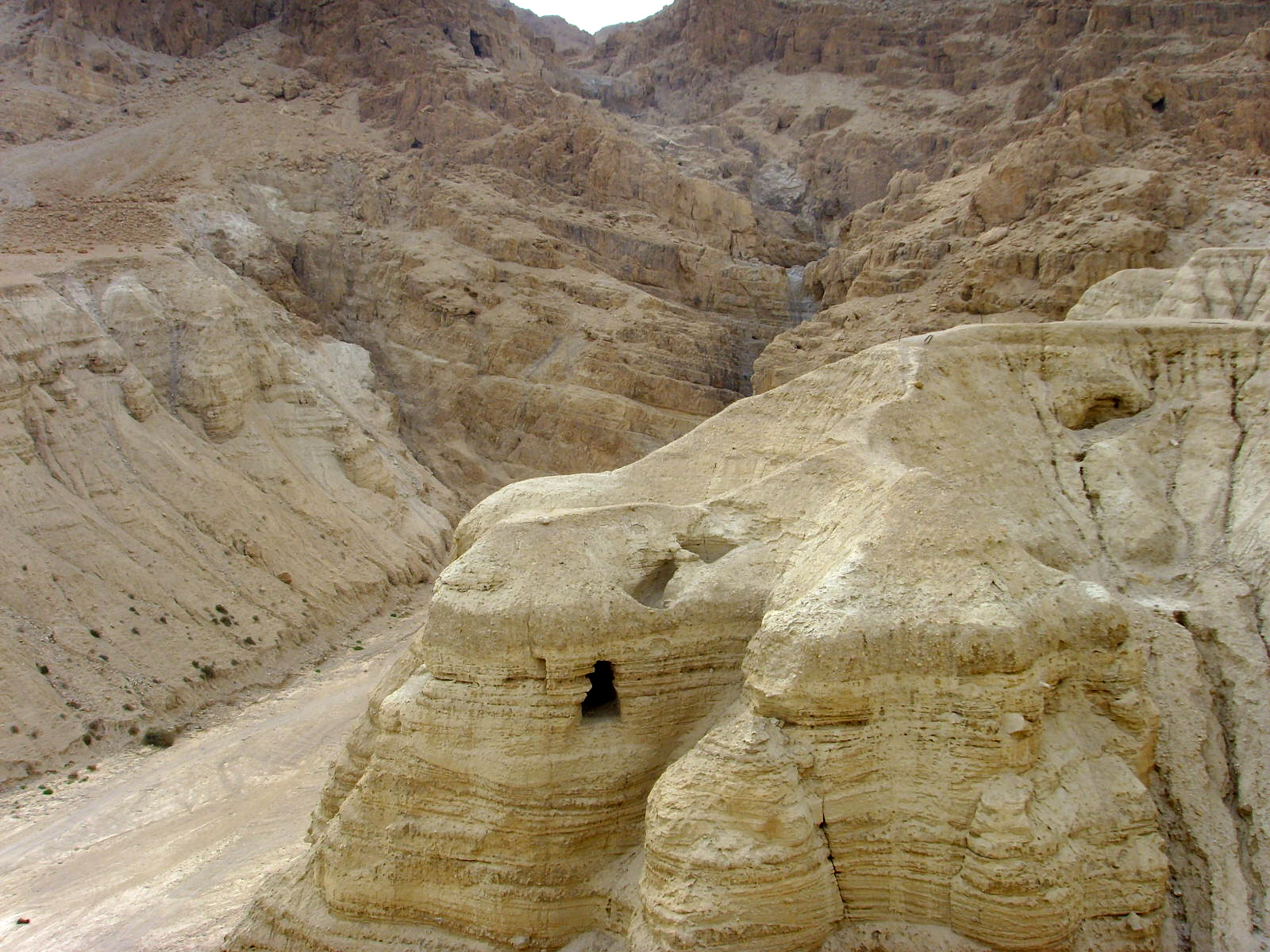
Qumran is the archaeological site near the northwestern shore of the Dead Sea where the Dead Sea Scrolls were discovered beginning in 1947. The settlement is commonly associated with the Essenes, a Jewish sectarian community, though this identification is debated. The scrolls include the oldest known manuscripts of the Hebrew Bible, offering a window into Jewish religious life just before and during the emergence of Christianity.
Archaeology
Roland de Vaux led the principal excavations across six seasons from 1951–1956, uncovering a communal complex including a possible scriptorium with inkwells and writing benches, multiple ritual baths, and coin hoards. Eleven nearby caves yielded scroll deposits dated between the 3rd century BC and 1st century AD. De Vaux's interpretation of Qumran as an Essene settlement remains the dominant view but is actively contested — some scholars argue instead for a fortress, a villa, or a commercial trading post.

On a modern map
Further reading
Reflect
The Qumran community withdrew to the desert to copy and guard the Scriptures — what would you preserve at any cost?
Capstone Bible is a free interactive study app — a map of every place in this library, a zoomable timeline of biblical and church history, the Bible text with every name in it linked to its article, reading plans and personal notes.
Open Capstone Bible