Ancient City
Jericho
JAIR-ih-koh · Modern Tell es-Sultan, Jericho, West Bank · 31.8711° N, 35.4439° E
Jericho is described in Joshua 6 as the first Canaanite city conquered by the Israelites, its walls said to have collapsed after they marched around it for seven days. In the New Testament, Jericho is the setting for the healing of the blind beggar Bartimaeus (Mark 10:46-52) and Jesus's encounter with the tax collector Zacchaeus (Luke 19:1-10).
Archaeology
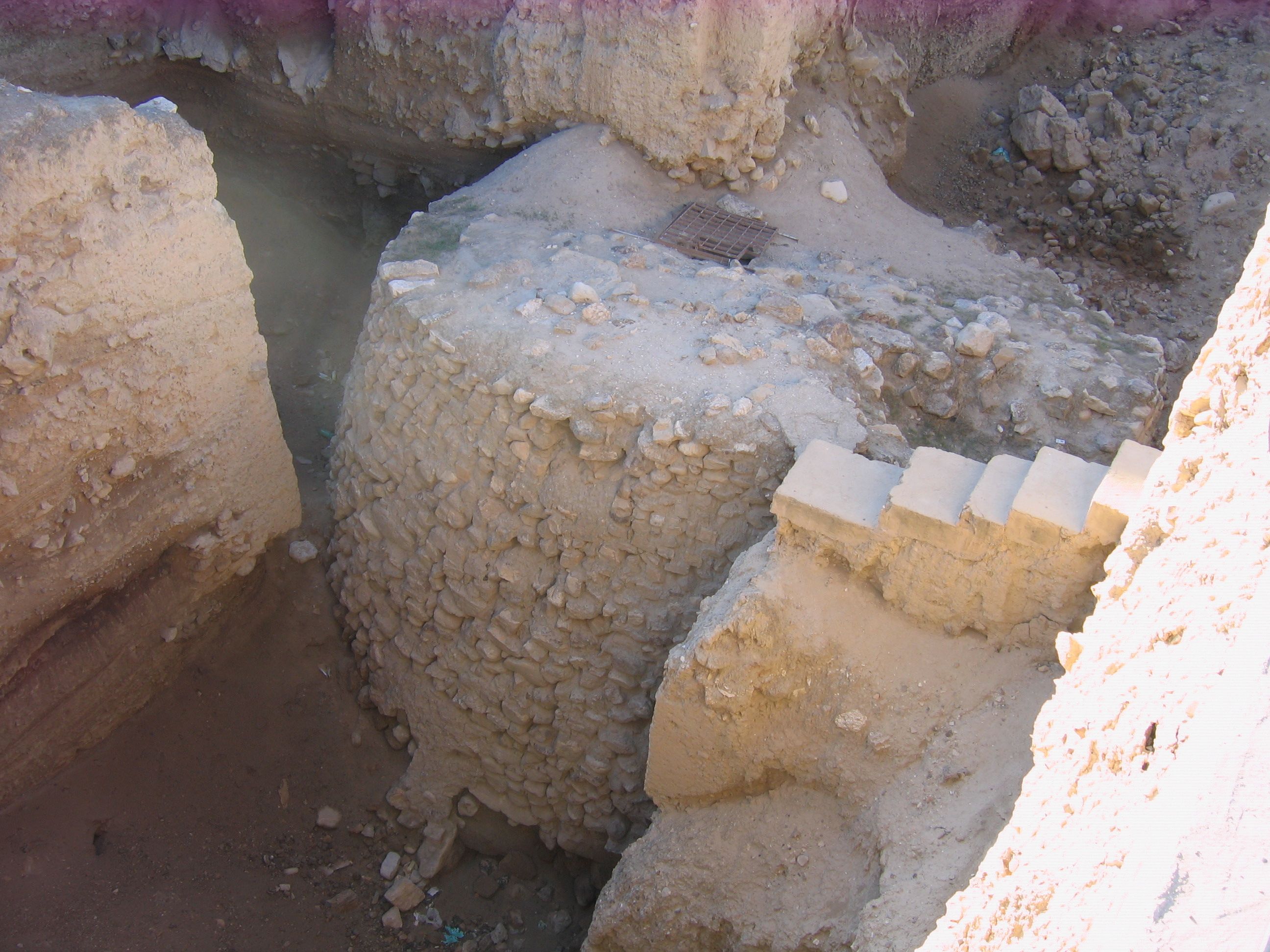
Five expeditions have dug Tell es-Sultan: C. Warren's soundings of 1867-68, the Austrian-German expedition of E. Sellin and C. Watzinger in 1907-09 and 1911, J. Garstang in 1930-36, K. Kenyon in 1952-58, and the Italian-Palestinian expedition of L. Nigro and H. Taha since 1997. What nobody disputes is the Neolithic stone tower and wall of about 8000 BC, among the oldest monumental structures anywhere on earth. What is disputed is the date the last walled Bronze Age city burned, and that argument is the most contested question in biblical archaeology. Garstang found a burnt city he numbered City IV, found a collapsed double wall, and dated the fall to about 1400 BC — close enough to a fifteenth-century conquest to be read as Joshua 6 confirmed. Kenyon re-dug the same ground with finer stratigraphic control and reached a different answer, and it is worth stating plainly rather than softened: she assigned City IV to the end of the Middle Bronze Age, which in her assessment ended about 1580 BC, attributed its destruction to Egyptian campaigning at the start of the Eighteenth Dynasty, and concluded that the Late Bronze town on the mound was slight and unwalled, with no fortified city standing at the dates a conquest is usually placed. Garstang's collapsed double wall turned out to be Early Bronze Age, about a thousand years older than he thought, and that correction is conceded on all sides. Most of the field followed Kenyon and still does. B. Wood reopened the question in 1990, and his case deserves its own terms rather than a summary of its conclusion: he argued that Kenyon had dated City IV chiefly by what was missing — imported Cypriot ware she did not find in her trenches — which he called poor method, and that the local painted pottery, the bowls, cooking pots and dipper juglets she did excavate belong typologically to Late Bronze I, not to the Middle Bronze Age. Stratigraphy, a scarab series and a radiocarbon date were offered in support; the pottery was the argument. The reception is the other half, and leaving it out would be advocacy. P. Bienkowski answered him in the same journal that year and concluded the redating must be rejected, and the excavated radiocarbon evidence went against it as well: H. Bruins and J. van der Plicht dated six samples of charred grain from the destruction layer and wrote that the city was not destroyed by about 1400 BC as Wood had suggested, placing the fall in the late seventeenth or the sixteenth century BC. Wood's answer is that second-millennium radiocarbon dates run systematically early, which is itself a contested claim. Most archaeologists reject the redating; a minority, including T. Kennedy in a 2023 paper, still argue the Late Bronze I case. The question is open, and this page is not going to close it.

On a modern map
Further reading
- H. Bruins and J. van der Plicht, "Tell es-Sultan (Jericho): Radiocarbon Results ... from the End of the Middle Bronze Age," Radiocarbon 37:2 (1995), 213-220
- B. Wood, "Did the Israelites Conquer Jericho?", Biblical Archaeology Review 16:2 (March/April 1990)
- P. Bienkowski, "Jericho Was Destroyed in the Middle Bronze Age, Not the Late Bronze Age", and Wood's reply, Biblical Archaeology Review 16:5 (Sept/Oct 1990)
- Sapienza University of Rome: the Italian-Palestinian Expedition to Tell es-Sultan
- Tell es-Sultan - Wikipedia
- Kathleen Kenyon - Britannica
Reflect
Jericho's mound holds thousands of years of people starting over on the same ground — what in your life is ready to be rebuilt?
Capstone Bible is a free interactive study app — a map of every place in this library, a zoomable timeline of biblical and church history, the Bible text with every name in it linked to its article, reading plans and personal notes.
Open Capstone Bible