Ancient Roman Road / Legendary Site
Appian Way / Church of Quo Vadis
AP-ee-un WAY / kwoh VAH-diss · Modern Via Appia Antica, Rome, Italy · 41.8459° N, 12.5210° E
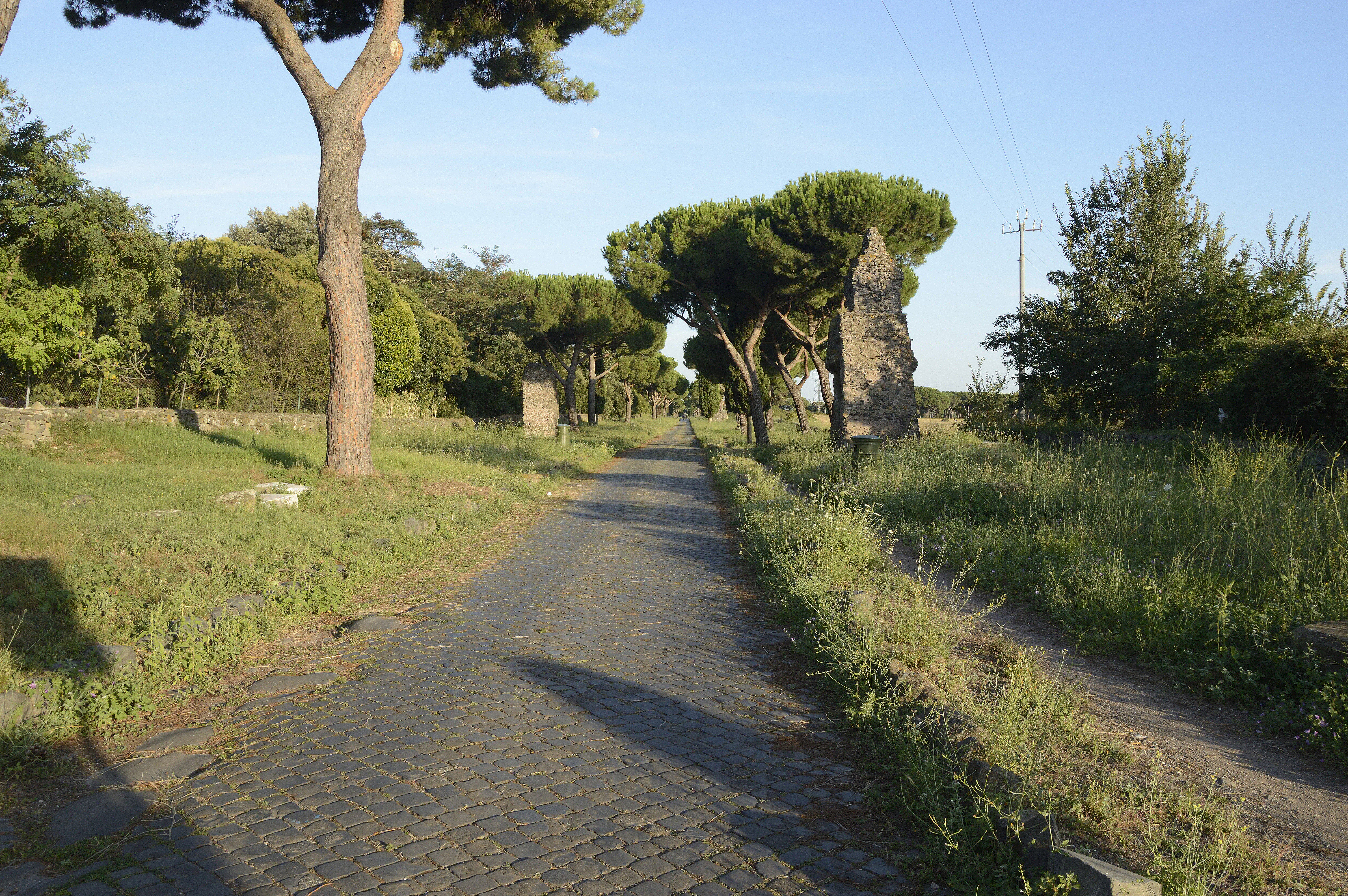
The Via Appia (Appian Way), begun in 312 BC by censor Appius Claudius Caecus, was ancient Rome's principal highway south. About 800m outside Porta San Sebastiano stands the small Church of Domine Quo Vadis, built on the spot where later Christian tradition, drawn from the apocryphal Acts of Peter, holds that the Apostle Peter, fleeing Rome to escape persecution, encountered a vision of the risen Christ. Peter reportedly asked "Domine, quo vadis?" ("Lord, where are you going?"), and Christ answered that he was going to Rome to be crucified again — prompting Peter's shamed return to the city and eventual martyrdom.
Archaeology
The Appian Way itself is extensively excavated and preserved, forming the Appia Antica Archaeological Park; in July 2024 the road was inscribed as a UNESCO World Heritage Site. The Quo Vadis legend, by contrast, is not attested in the New Testament and rests solely on the apocryphal Acts of Peter — scholars regard it as pious legend, not history. The current chapel dates only to 1637, though a sanctuary has stood on the site since at least the 9th century.

On a modern map
Further reading
Reflect
The Quo Vadis story pictures Peter turning back toward the danger he was fleeing — where are you running from something you're meant to face?
More sites
Capstone Bible is a free interactive study app — a map of every place in this library, a zoomable timeline of biblical and church history, the Bible text with every name in it linked to its article, reading plans and personal notes.
Open Capstone Bible